What is a 3D Printing Machine and How Does It Work?
A 3D Printing Machine basically takes digital designs and turns them into real, tangible objects. It’s honestly been a game-changer across so many industries. You’ve got companies like Stratasys and Formlabs sitting at the top of the market—these guys make machines that suit all kinds of needs. For example, the 3D printing machine is really good for metal fabrication stuff.
Getting your head around how a 3D Printer works is pretty important. It’s all about additive manufacturing—meaning it builds things layer by layer. This method makes it possible to create super detailed, complex designs that traditional manufacturing just can’t handle easily. But, it’s not all smooth sailing. Picking the right materials and dealing with longer print times can definitely be tricky. And honestly, most people end up doing a bit of trial and error—learning as they go.
Even with those challenges, the potential is huge. A 3D printer can whip up custom parts fast, saving a lot of time and cutting down on waste. Still, you gotta stay on your toes because not every print will turn out perfect on the first try. Every project is a chance to learn something new. As the technology keeps advancing, so will what these machines can do—there’s definitely a lot of exciting stuff on the horizon.
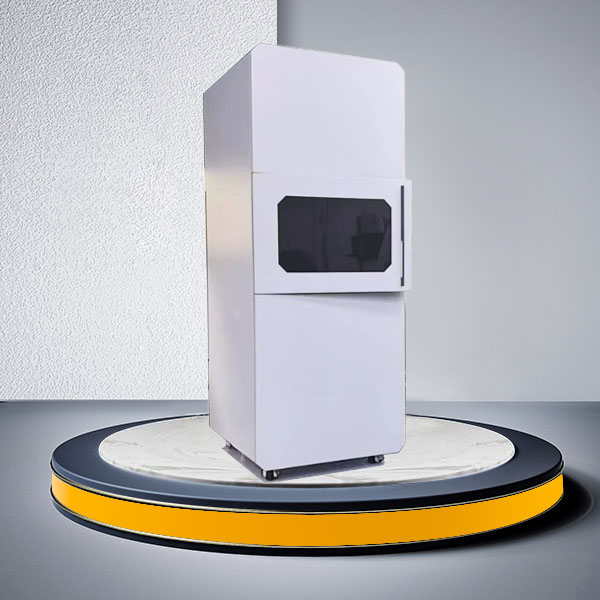
What is 3D Printing?
3D printing, often known as additive manufacturing, is revolutionizing how we create objects. Instead of traditional subtractive methods, 3D printing builds items layer by layer. This technology uses a digital file to guide the printer, which melts or fuses materials together. Common materials include plastics, metals, and even ceramics. The process is fascinating but not perfect. Sometimes prints can warp or fail entirely.
The applications of 3D printing are vast. In healthcare, it can produce custom prosthetics tailored to individual needs. In construction, it has enabled entire structures to be printed on-site. However, challenges exist. Quality control can be an issue. Variations in temperature or materials can lead to unexpected results. Designers must constantly evaluate their processes to improve outcomes.
In education, 3D printing engages students in hands-on learning. They can turn ideas into tangible models, fostering creativity. Yet, not every attempt yields success. Students learn resilience as they troubleshoot failures. This process highlights the importance of persistence in innovation. 3D printing offers endless possibilities, but it also requires careful consideration and adaptation.
3D Printing Technology Adoption by Industry
Historical Development of 3D Printing Technology
3D printing, also known as additive manufacturing, has come a long way since its inception. The journey began in the 1980s when the first methods were introduced. A man named Chuck Hull created the first 3D printer. His invention used photopolymerization to produce objects layer by layer. This groundbreaking technique started a new era in manufacturing.
Over the years, 3D printing technology evolved considerably. The 1990s saw the rise of new methods, such as selective laser sintering. This process allowed the creation of more complex designs. It significantly improved on the initial techniques. Yet, challenges remained. Early printers were costly and not accessible to many.
By the early 2000s, 3D printing became more affordable. New materials emerged, expanding its applications. Now, industries are finding creative uses in medical, automotive, and even food production. However, the technology isn't perfect. Quality control and material limitations still pose issues. The journey of 3D printing is ongoing, with new innovations on the horizon.
What is a 3D Printing Machine and How Does It Work? - Historical Development of 3D Printing Technology
| Year | Event | Technology | Impact |
|---|---|---|---|
| 1980 | First 3D Printer Invention | Stereolithography | Established the foundation for modern 3D printing technology. |
| 1990 | First Commercial 3D Printing Companies | Fused Deposition Modeling (FDM) | Brought 3D printing into the business sector. |
| 2000 | Introduction of Powder Bed Fusion | Selective Laser Sintering (SLS) | Expanded the range of materials and applications for 3D printing. |
| 2010 | Rise of Consumer 3D Printers | Low-cost FDM Printers | Increased accessibility for individuals and small businesses. |
| 2020 | Advancements in Bioprinting | 3D Bioprinting | Potential for medical innovations, including organ printing. |
Main Types of 3D Printing Machines
3D printing machines come in various types, each serving specific applications across industries. Fused Deposition Modeling (FDM) is one of the most common methods. It creates objects layer by layer by melting plastic filament. In 2020, FDM technology accounted for nearly 70% of the 3D printing market, showcasing its popularity.
Another significant type is Stereolithography (SLA). This method uses a UV light source to cure resin into solid objects. Reports indicate that SLA is preferred for detailed prototypes and medical applications. The precision of SLA is unmatched, but the materials can be expensive.
When considering a 3D printing machine, take note of your projects' requirements. If quick prototyping is needed, FDM might suffice. For detailed designs, explore SLA. Tips: Always compare material costs versus print quality. Ensure that your chosen technology aligns with your specific needs.
Lastly, the advent of industrial-grade 3D printing has led to innovations like the Laser Printing Machine. This substitutes traditional processes and can create parts in metal or polymer. While promising, these machines require significant investment and expertise. Understanding the trade-offs before diving in will save you future headaches.
Conclusion
A 3D printing machine is a revolutionary tool that creates three-dimensional objects by layering materials based on digital models. This technology has evolved significantly since its inception, with various methods such as Fused Deposition Modeling (FDM) and Stereolithography (SLA) showcasing the diverse capabilities of 3D printers. The process involves converting a digital design into a physical object through precise layering, utilizing materials like plastics, metals, and ceramics.


Comments
Post a Comment